

Biochar is transforming how India thinks about agriculture and climate change. This carbon-rich soil amendment, made from agricultural waste, offers a game-changing solution for farmers struggling with depleted soils and unpredictable harvests.
This guide is for Indian farmers, agricultural professionals, policymakers, and anyone interested in sustainable farming practices that can boost crop yields while fighting climate change.
We’ll explore how biochar India initiatives are creating carbon sequestration agriculture opportunities that benefit both the environment and farm productivity. You’ll discover the specific agricultural challenges across India that make biochar benefits farmers particularly valuable – from soil degradation to water retention issues. Finally, we’ll cover practical implementation strategies that can scale agricultural waste to biochar programs nationwide, creating a climate smart agriculture India model that works for real farming communities.
Ready to see how this carbon-rich soil solution could reshape Indian agriculture? Let’s dig into why biochar production India represents one of the most promising paths forward for sustainable farming India practices.
Understanding Biochar as a Carbon-Rich Solution
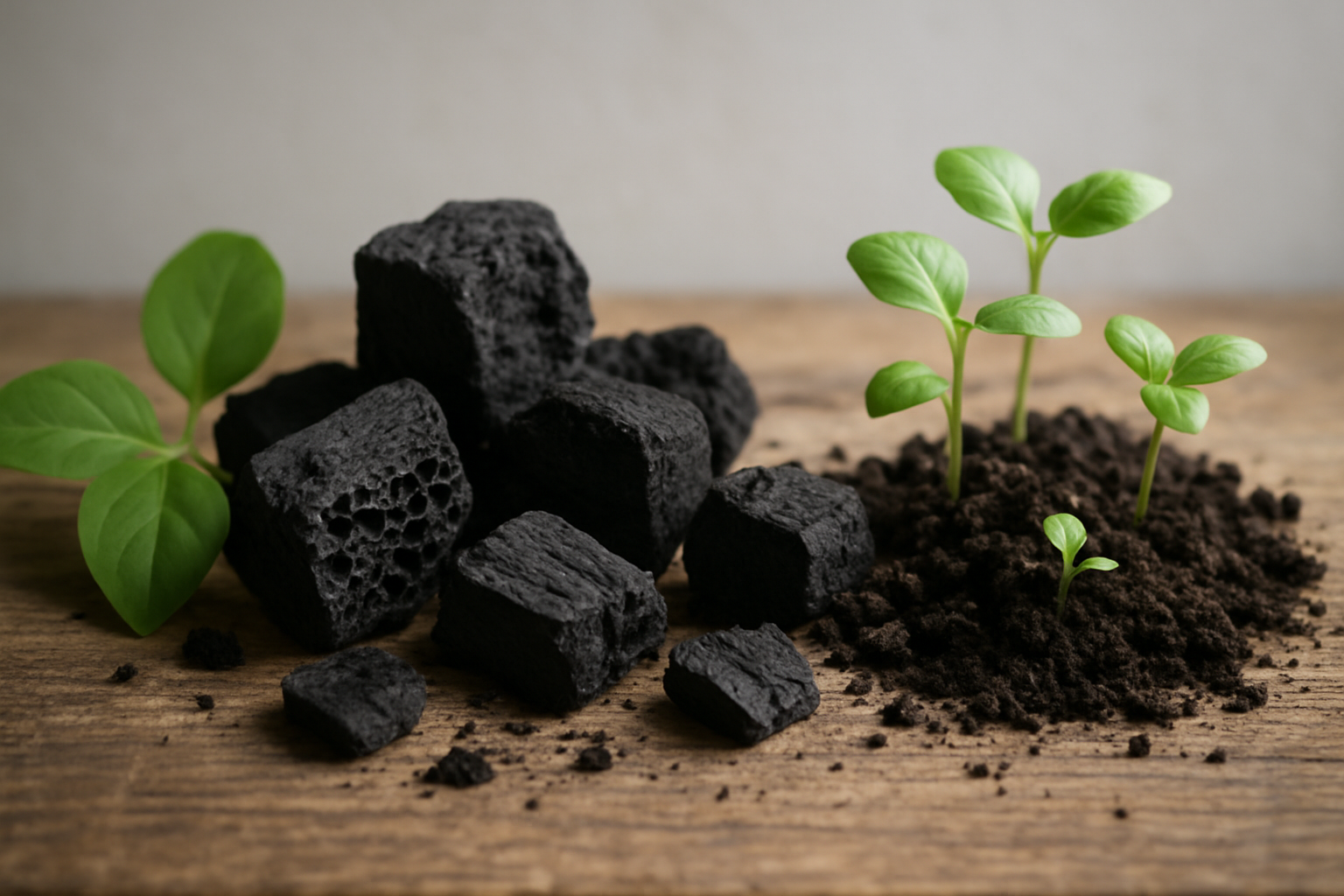
Scientific definition and composition of biochar
Biochar is a stable, carbon-rich material created when organic matter undergoes pyrolysis – heating in an oxygen-limited environment. Think of it as nature’s way of preserving carbon for centuries. Unlike regular ash or burnt material, biochar contains 60-90% carbon by weight, making it an incredibly effective carbon sequestration agriculture tool.
The microscopic structure of biochar resembles a sponge, riddled with tiny pores that trap nutrients and water. This porous nature gives biochar its superpower – the ability to hold onto essential minerals that plants need while preventing them from washing away during heavy rains. The surface area of just one gram of quality biochar can equal that of a football field when all the microscopic nooks and crannies are measured.
What makes biochar special is its chemical stability. While compost breaks down within months, biochar can remain in soil for hundreds or even thousands of years. Scientists have found biochar remnants in ancient Amazonian soils that are still enriching the earth after 500 years.
Production process through pyrolysis technology
Creating biochar involves a fascinating process called pyrolysis, where agricultural waste transforms into a valuable soil amendment biochar. Picture a controlled burning process that happens without flames – organic materials like rice husks, wheat stalks, or coconut shells are heated between 300-700°C in specially designed chambers with minimal oxygen.
The magic happens when biomass breaks down under intense heat. Water evaporates first, followed by volatile compounds that can be captured as bio-oil and syngas – valuable byproducts for energy production. What remains is the carbon skeleton of the original material, now transformed into stable biochar.
Modern biochar production India facilities use advanced reactors that can process tons of agricultural waste daily. These systems often capture and utilize the gases released during pyrolysis, making the entire process energy-efficient. Some operations even generate enough excess energy
Environmental Benefits That Transform Agriculture
Carbon sequestration for climate change mitigation
Biochar acts as a powerful carbon sink, locking atmospheric carbon dioxide into stable soil deposits for centuries. When organic waste like crop residues undergoes pyrolysis to create biochar, the carbon that would normally decompose and release CO2 back into the atmosphere gets trapped in a stable form. This carbon sequestration agriculture approach can help India meet its climate commitments while building healthier soils.
Studies show that biochar can store carbon in soil for 100 to 1,000 years, making it one of the most effective long-term carbon storage solutions available to farmers. For every ton of biochar applied to agricultural land, approximately 2.6 tons of CO2 equivalent can be removed from the atmosphere. With India’s vast agricultural landscape covering over 140 million hectares, the potential for biochar India initiatives to impact global carbon levels is immense.
The stability of biochar’s carbon structure means farmers can contribute to climate change mitigation without sacrificing agricultural productivity. Unlike other carbon sequestration methods that require taking land out of production, biochar enhancement actually improves crop yields while storing carbon.
Soil fertility enhancement and nutrient retention
Soil amendment biochar transforms poor soils into fertile growing mediums through its unique porous structure and chemical properties. The high surface area of biochar particles creates countless microsites where beneficial soil microorganisms can thrive, leading to improved biological activity and nutrient cycling.
Biochar’s ability to retain essential nutrients like nitrogen, phosphorus, and potassium prevents them from leaching away during heavy rains or irrigation. This nutrient retention capacity is particularly valuable in India’s tropical and subtropical regions where monsoon rains typically wash away expensive fertilizers before crops can fully utilize them.
The biochar benefits farmers experience include:
- Increased cation exchange capacity: Biochar can hold onto positively charged nutrients and release them slowly to plant roots
- pH buffering: Helps neutralize acidic soils common in many Indian agricultural regions
- Enhanced microbial habitat: Provides shelter and food sources for beneficial soil bacteria and fungi
- Improved soil structure: Creates stable aggregates that resist erosion and compaction
Research from Indian agricultural universities shows that biochar applications can increase crop yields by 15-30% while reducing fertilizer requirements by up to 25%.
Water conservation through improved soil structure
Biochar’s porous nature dramatically improves soil water-holding capacity, making it a game-changer for water-stressed regions across India. The internal structure of biochar particles can hold water up to six times their weight, creating a reservoir that plants can access during dry periods.
This enhanced water retention translates directly into reduced irrigation needs and improved drought resilience. In states like Rajasthan, Maharashtra, and Karnataka where water scarcity limits agricultural productivity, biochar applications can extend growing seasons and reduce crop failures.
Sustainable farming India practices benefit from biochar’s impact on soil physics:
| Water Management Benefit | Impact Percentage |
|---|---|
| Increased water retention | 20-40% |
| Reduced irrigation frequency | 25-35% |
| Improved infiltration rate | 15-25% |
| Decreased surface runoff | 30-50% |
The improved soil structure also reduces surface crusting and compaction, allowing better water penetration and root development. This creates a positive cycle where plants develop stronger root systems that can access water and nutrients more effectively.
Reduction in greenhouse gas emissions from farming
Agricultural practices in India generate significant greenhouse gas emissions through fertilizer use, crop residue burning, and livestock management. Climate smart agriculture India approaches using biochar address multiple emission sources simultaneously.
Biochar application reduces nitrous oxide (N2O) emissions from agricultural soils by 10-50% compared to conventional farming practices. This occurs because biochar’s porous structure provides anaerobic microsites where beneficial bacteria convert nitrates into harmless nitrogen gas rather than nitrous oxide.
The most immediate impact comes from replacing crop residue burning with agricultural waste to biochar conversion. Every year, Indian farmers burn approximately 92 million tons of crop residues, releasing massive amounts of CO2, methane, and particulate matter into the atmosphere. Converting just 30% of this waste into biochar could eliminate 25 million tons of CO2 equivalent emissions annually.
Biochar production India facilities also capture and utilize the gases and oils produced during pyrolysis, creating a closed-loop system that maximizes resource efficiency while minimizing waste. This integrated approach transforms agricultural waste streams from environmental liabilities into valuable carbon-rich soil solution products that benefit both farmers and the climate.
India’s Agricultural Challenges Requiring Urgent Solutions
Declining soil health and productivity crisis
Indian agricultural soils are experiencing a severe health crisis that threatens food security for over 1.4 billion people. More than 120 million hectares of agricultural land show signs of degradation, with soil organic matter levels dropping below 0.5% in many regions – far below the ideal 2-3% needed for healthy crops. This dramatic decline stems from decades of intensive farming practices that strip nutrients faster than they can be naturally replenished.
The productivity crisis manifests in shrinking crop yields despite increased input costs. Farmers report that their fields, once fertile and productive, now require double the fertilizers to achieve half the yields their grandfathers obtained. Biochar India initiatives are emerging as game-changers, offering a carbon-rich soil solution that can restore organic matter levels within 2-3 growing seasons.
Traditional farming wisdom emphasized maintaining soil life through organic matter, but modern practices have disrupted this balance. Continuous cropping without adequate organic inputs has created compacted, lifeless soils that struggle to retain moisture and nutrients. Soil amendment biochar provides a sustainable path forward, creating stable carbon structures that support beneficial microorganisms and improve soil structure for generations.
Excessive chemical fertilizer dependency issues
India ranks as the world’s second-largest fertilizer consumer, yet crop productivity per unit of fertilizer continues declining. Farmers spend increasingly larger portions of their income on synthetic inputs – urea, phosphate, and potash – creating a vicious cycle of dependency that erodes profitability while degrading soil health.
The overuse of chemical fertilizers has created several critical problems:
- Soil acidification: Excessive nitrogen applications lower soil pH, making nutrients unavailable to plants
- Micronutrient deficiencies: Heavy NPK usage disrupts trace element availability
- Reduced beneficial microorganisms: Chemical inputs kill soil bacteria and fungi essential for nutrient cycling
- Groundwater contamination: Excess nitrates and phosphates leach into water supplies
Sustainable farming India practices incorporating biochar benefits farmers by reducing fertilizer requirements by 20-30% while improving nutrient retention. The porous structure of biochar acts like a sponge, holding nutrients in the root zone longer and reducing leaching losses that force farmers to apply more chemicals.
Economic data reveals that fertilizer costs have tripled over the past decade while yields stagnate or decline. This unsustainable trajectory pushes small farmers deeper into debt cycles. Carbon sequestration agriculture through biochar application offers a way to break this dependency by creating self-sustaining soil fertility systems.
Growing water scarcity in farming regions
Water scarcity affects over 600 million Indians, with agriculture consuming 80% of available freshwater resources. Groundwater levels drop by 1-3 meters annually in major farming regions, forcing farmers to drill deeper wells or abandon cultivation altogether. Traditional irrigation methods waste 40-60% of applied water through evaporation and runoff.
Climate patterns have become increasingly unpredictable, with erratic monsoons leaving farmers vulnerable to both droughts and floods. The 2019 drought affected 45% of India’s agricultural area, while unexpected flooding destroyed crops across multiple states. These extreme weather events highlight the urgent need for water-resilient farming systems.
Biochar addresses water challenges through multiple mechanisms:
| Benefit | Impact |
|---|---|
| Water retention | Increases soil water-holding capacity by 15-20% |
| Reduced irrigation frequency | Extends intervals between watering by 30-40% |
| Improved infiltration | Enhances soil structure for better water absorption |
| Drought resilience | Helps crops survive longer dry periods |
Climate smart agriculture India strategies recognize biochar’s role in creating water-efficient farming systems. The amendment’s ability to hold water while maintaining proper drainage creates optimal growing conditions even during water stress periods.
Climate change impacts on crop yields
Rising temperatures, shifting precipitation patterns, and extreme weather events are reshaping Indian agriculture in unprecedented ways. Average temperatures have increased by 0.7°C over the past century, with some regions experiencing 2-3°C warming during critical crop growth periods. Heat stress now affects major crops including wheat, rice, and pulses, reducing yields by 10-15% in vulnerable areas.
Changing rainfall patterns create additional challenges. Monsoon seasons arrive later, end earlier, and deliver more intense but less frequent rainfall. This disruption affects traditional cropping calendars that farmers have followed for generations. Cyclones, hailstorms, and unexpected temperature spikes destroy crops worth billions of rupees annually.
Agricultural waste to biochar conversion offers dual climate benefits. First, it prevents the burning of crop residues that contributes 15-20% of North India’s air pollution. Second, biochar production India creates carbon sinks that remove atmospheric CO2 while improving soil resilience to climate stresses.
The amendment helps crops withstand temperature extremes by improving soil thermal properties and water availability. Research shows biochar-amended soils maintain more stable temperatures, protecting root systems from heat damage. Enhanced soil biology also strengthens plant immune systems, helping crops resist diseases that proliferate in changing climate conditions.
Small farmers face the greatest climate risks due to limited resources for adaptation. Biochar benefits farmers by providing affordable climate resilience that doesn’t require expensive infrastructure or technology upgrades. Simple application techniques make this carbon-rich soil solution accessible to resource-constrained agricultural communities across India.
Economic Advantages for Indian Farmers and Industries
Cost reduction in fertilizer and irrigation expenses
Biochar transforms agricultural economics by dramatically cutting input costs that often burden Indian farmers. When applied to soil, biochar acts like a nutrient sponge, holding onto fertilizers and preventing them from washing away with monsoon rains. This means farmers can reduce their fertilizer purchases by 15-30% while maintaining the same nutrient levels in their crops.
The water retention properties of biochar prove equally valuable for cost savings. Soils treated with biochar hold 20-40% more water than untreated soils, reducing irrigation frequency and costs. For smallholder farmers in water-stressed regions like Maharashtra and Karnataka, this translates to significant savings on diesel for water pumps and reduced dependency on expensive drip irrigation systems.
Chemical fertilizer prices have skyrocketed in recent years, making biochar an attractive alternative. A single application of biochar can improve soil fertility for 3-5 years, compared to chemical fertilizers that require seasonal reapplication. This long-term benefit creates substantial cumulative savings for farming households.
Increased crop yields and improved farm profitability
Research across Indian agricultural conditions shows biochar applications increase crop yields by 10-25% on average. Rice paddies in Punjab treated with biochar showed 18% higher yields, while cotton farmers in Gujarat reported 22% increases in their harvests. These improvements stem from better nutrient retention, improved soil structure, and enhanced microbial activity that biochar promotes.
The yield improvements vary by crop type and soil conditions, but the economic impact remains consistently positive. Wheat farmers using biochar-amended soils report not just higher quantities but also improved grain quality, leading to better market prices. Vegetable growers find that biochar helps extend growing seasons and reduces crop losses from soil-borne diseases.
Farm profitability increases through multiple pathways. Higher yields mean more produce to sell, while reduced input costs improve profit margins. Many farmers report breaking even on biochar investments within the first growing season, with subsequent seasons delivering pure profit gains. The soil health improvements also reduce long-term degradation costs and maintain productive farmland for future generations.
New income opportunities from agricultural waste conversion
Agricultural waste represents a massive untapped economic opportunity in India. The country generates over 500 million tons of crop residues annually, much of which farmers currently burn, creating air pollution and wasting valuable resources. Converting this waste into biochar creates new revenue streams for rural communities.
Small-scale biochar production units can process rice husks, wheat straw, and cotton stalks into valuable soil amendments. These community-level operations provide employment opportunities in rural areas while solving the stubble burning crisis. Farmers can earn ₹3,000-8,000 per ton of biochar produced, depending on quality and local demand.
The biochar value chain creates multiple income opportunities. Some farmers become producers, others become sellers or distributors. Agricultural cooperatives can establish shared biochar production facilities, spreading costs and maximizing benefits. Urban gardening centers and organic farms represent growing markets for premium biochar products.
Government incentives and carbon credit programs add another income layer. Farmers producing biochar can potentially earn carbon credits for sequestering atmospheric carbon, creating additional revenue while fighting climate change. This dual benefit makes biochar production particularly attractive for climate smart agriculture India initiatives.
Implementation Strategies for Large-Scale Adoption
Government Policy Support and Subsidy Programs Needed
Creating a robust biochar industry in India requires strong government backing through targeted policies and financial incentives. The Ministry of Agriculture and Farmers Welfare needs to establish biochar production under existing schemes like the National Mission on Sustainable Agriculture. Subsidies should cover 50-70% of biochar production equipment costs, making it affordable for small and medium farmers to invest in pyrolysis units.
State governments can introduce carbon credit programs where farmers earn money for sequestering carbon through biochar India applications. Agricultural universities should receive funding to conduct region-specific research on optimal biochar formulations for different soil types and crops. Tax incentives for biochar production companies and streamlined approval processes for setting up pyrolysis plants will accelerate industry growth.
The government should also mandate biochar use in government-sponsored agricultural projects and include it in the Pradhan Mantri Fasal Bima Yojana crop insurance scheme, providing additional coverage for farmers using sustainable farming India practices.
Technology Transfer and Farmer Education Initiatives
Successful biochar adoption depends heavily on educating farmers about its benefits and proper application methods. Agricultural extension services need comprehensive training programs to demonstrate biochar benefits farmers can expect, including improved soil fertility, water retention, and crop yields.
Krishi Vigyan Kendras should establish biochar demonstration plots where farmers can observe long-term results firsthand. Mobile training units equipped with small-scale pyrolysis units can visit rural areas, showing farmers how to convert agricultural waste to biochar using locally available materials like rice husks, wheat straw, and cotton stalks.
Partnerships between agricultural universities, NGOs, and farmer producer organizations can create peer-to-peer learning networks. Digital platforms and smartphone apps in local languages can provide real-time guidance on biochar application rates, timing, and techniques. Video tutorials showing successful biochar implementation stories from fellow farmers will build confidence and encourage adoption.
Technical support centers should be established at the district level, offering soil testing services to determine optimal biochar application rates and providing ongoing support to farmers throughout their transition to climate smart agriculture India practices.
Integration with Existing Agricultural Practices
Biochar production India must align seamlessly with current farming methods to ensure widespread acceptance. Farmers already practicing composting can easily integrate biochar into their organic matter management by adding 10-20% biochar to compost piles, creating enhanced soil amendments.
For crop residue management, farmers can use portable pyrolysis units during harvest seasons, converting stubble and agricultural waste into valuable biochar instead of burning it. This approach addresses air pollution concerns while creating additional income streams.
Biochar works exceptionally well with traditional practices like vermicomposting and green manuring. When combined with cow dung and organic fertilizers, biochar creates a powerful soil amendment biochar mixture that enhances nutrient retention and microbial activity.
The integration process should start with pilot programs in progressive farming communities, gradually expanding to neighboring areas as success stories emerge. Farmers can begin with small plot applications, scaling up as they gain confidence and observe positive results.
Building Biochar Production Infrastructure Nationwide
Developing widespread biochar production requires a multi-tiered infrastructure approach. Village-level micro-pyrolysis units can process local agricultural waste, serving 50-100 farmers each. These decentralized units reduce transportation costs and create local employment opportunities.
District-level medium-scale facilities can handle larger volumes and serve as regional supply centers, ensuring consistent carbon-rich soil solution availability throughout the growing season. These facilities should include quality testing laboratories to maintain product standards and optimize biochar properties for specific local soil conditions.
Industrial-scale biochar production India facilities near major agricultural zones can process large quantities of feedstock and supply biochar to multiple states. These facilities should incorporate advanced pyrolysis technology with energy recovery systems, making operations economically viable and environmentally sustainable.
Storage and distribution networks need development through partnerships with existing fertilizer dealers and agricultural input suppliers. Cold storage facilities can maintain biochar quality during monsoon seasons, while transportation networks ensure timely delivery to farmers.
Public-private partnerships can accelerate infrastructure development, with government providing land and policy support while private companies invest in technology and operations. This collaborative approach will establish a robust biochar supply chain supporting carbon sequestration agriculture goals across India.
Biochar represents a game-changing opportunity for India’s agricultural sector and environmental future. This carbon-rich solution tackles multiple challenges at once – improving soil health, reducing greenhouse gas emissions, and boosting crop yields while offering farmers a new revenue stream. With India facing mounting pressures from soil degradation, climate change impacts, and the need to feed a growing population, biochar emerges as a practical answer that works with nature rather than against it.
The path forward requires coordinated action from farmers, policymakers, and industry leaders to make biochar production and application accessible nationwide. Government incentives, farmer education programs, and strategic partnerships can accelerate adoption while creating jobs and reducing agricultural waste. India has the raw materials, the agricultural need, and the innovation capacity to become a global leader in biochar technology – the question isn’t whether this transition will happen, but how quickly we can make it a reality for millions of farmers across the country.