
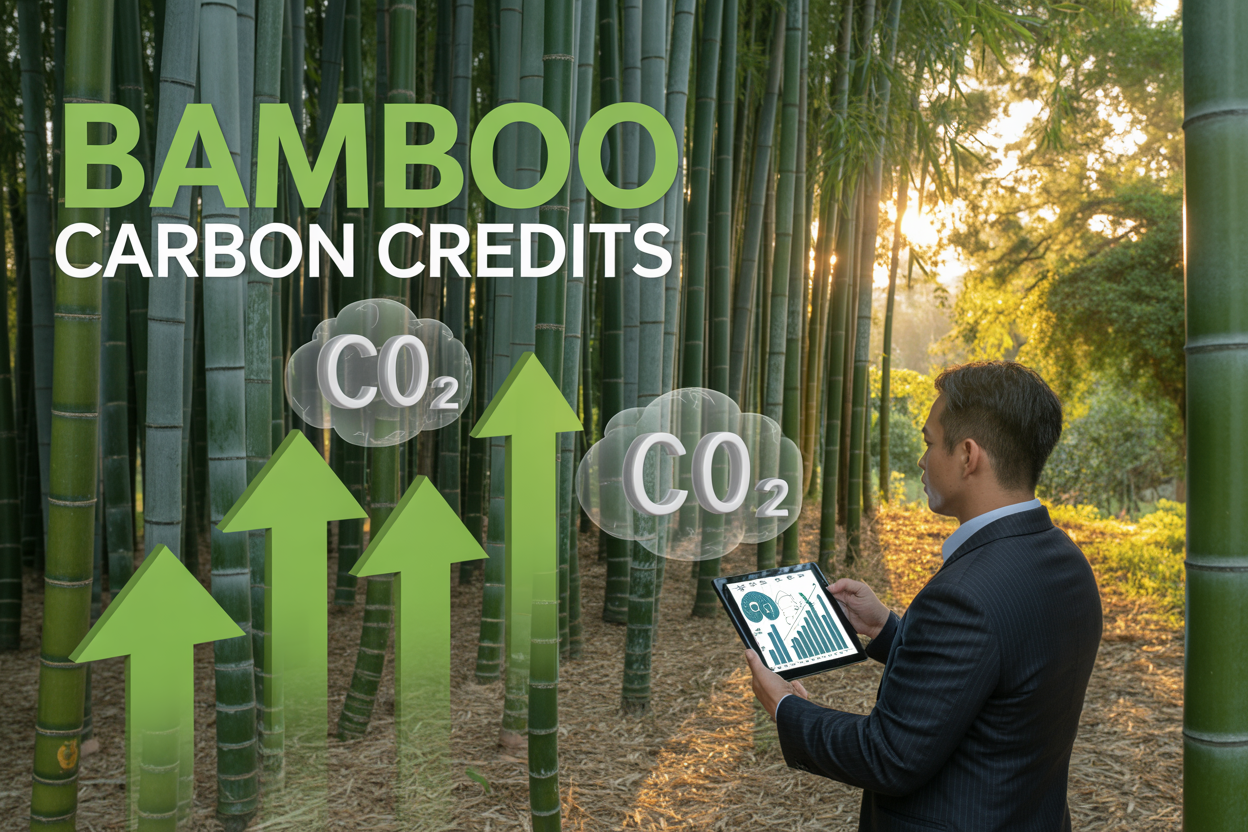
The Ultimate Guide to Earning Carbon Credits from Bamboo
Bamboo farmers, landowners, and sustainability entrepreneurs can turn their bamboo cultivation into a profitable carbon offset business. This comprehensive guide walks you through everything you need to know about bamboo carbon credits and how to transform your bamboo plantation carbon revenue from concept to reality.
Bamboo’s incredible ability to absorb CO2 makes it one of the most effective plants for carbon sequestration bamboo projects. With the right approach, your bamboo farming operation can generate consistent income while fighting climate change.
We’ll cover the essential requirements for bamboo carbon credit registration, including documentation and verification standards you must meet. You’ll also discover the step-by-step process to register your bamboo project with major carbon credit platforms and learn proven strategies for maximizing your earnings from sustainable bamboo carbon farming.
Ready to turn your green thumb into green profits? Let’s dive into how bamboo reforestation carbon credits can become your next revenue stream.
Understanding Bamboo’s Carbon Sequestration Power

How Bamboo Absorbs CO2 Faster Than Trees
Bamboo’s carbon sequestration abilities put traditional trees to shame. This grass species can absorb up to 35% more carbon dioxide than hardwood trees, making it a powerhouse for carbon offset projects. The secret lies in bamboo’s incredible growth rate – some species can grow up to 35 inches in a single day.
Unlike trees that take decades to reach maturity, bamboo reaches full height within 3-5 years. During this rapid growth phase, bamboo plants are constantly pulling CO2 from the atmosphere to build their cellular structure. The fast-growing culms (stems) store carbon both above and below ground through their extensive root systems.
Traditional reforestation projects with hardwood trees require 20-40 years to show significant carbon storage results. Bamboo carbon offset projects start generating measurable results within the first growing season. This speed advantage makes bamboo farming an attractive option for those looking to earn money bamboo farming while contributing to climate solutions.
The root system deserves special attention. Bamboo’s rhizome network continues growing underground even after harvesting the above-ground culms. This means the carbon stored in the root system remains sequestered permanently, creating a stable foundation for long-term carbon credits from bamboo cultivation.
Scientific Evidence Behind Bamboo’s Carbon Storage Capacity
Research from leading agricultural institutions shows bamboo’s carbon storage capacity ranges from 150-400 tons of CO2 per hectare over a 30-year period. The International Bamboo and Rattan Organisation (INBAR) has documented extensive data proving bamboo’s effectiveness as a carbon sink.
A study published in the Journal of Environmental Management found that bamboo plantations can sequester 12-15 tons of CO2 per hectare annually during peak growth years. This rate significantly exceeds most forest types in similar climatic conditions.
Key scientific findings include:
- Above-ground biomass: Stores 60-70% of total carbon
- Below-ground biomass: Root systems hold 30-40% of carbon
- Soil carbon: Enhanced by 25-30% within 5 years of planting
- Harvesting cycle: Maintains carbon storage while generating revenue
The carbon remains locked in bamboo products for decades when processed into construction materials, furniture, or textiles. This extended carbon storage period makes sustainable bamboo carbon farming projects highly valuable in carbon credit markets.
Laboratory analysis shows bamboo culms contain approximately 45% carbon by dry weight. When you multiply this by bamboo’s exceptional biomass production, the carbon sequestration numbers become impressive for any bamboo plantation carbon revenue project.
Different Bamboo Species and Their Carbon Capture Rates
Not all bamboo species offer equal carbon sequestration potential. Choosing the right species dramatically impacts your bamboo carbon credit registration success and revenue generation.
Giant Timber Bamboo (Dendrocalamus giganteus) leads the pack with carbon storage rates of 300-400 tons CO2 per hectare over 30 years. These massive culms can reach 130 feet tall with 8-inch diameters, creating substantial biomass quickly.
Moso Bamboo (Phyllostachys edulis) captures 250-350 tons CO2 per hectare over three decades. Popular in temperate climates, Moso bamboo grows rapidly and produces high-quality timber suitable for construction applications.
| Bamboo Species | CO2 Capture Rate (tons/hectare/30 years) | Climate Zone | Growth Rate |
|---|---|---|---|
| Giant Timber | 300-400 | Tropical | 6-8 inches/day |
| Moso | 250-350 | Temperate | 3-4 inches/day |
| Guadua | 200-300 | Subtropical | 4-6 inches/day |
| Bambusa oldhamii | 180-250 | Tropical/Subtropical | 2-3 inches/day |
Guadua Bamboo works well for bamboo reforestation carbon credits in subtropical regions, storing 200-300 tons CO2 per hectare. Its structural strength makes it valuable for construction, extending carbon storage life.
Climate matching is critical for carbon credit eligibility bamboo projects. Species must thrive in your local conditions to achieve projected carbon capture rates. Consulting with bamboo specialists before selecting species can prevent costly mistakes and ensure your carbon sequestration bamboo project meets verification standards.
Essential Requirements for Carbon Credit Eligibility
Land Size and Location Standards
The minimum land requirements for bamboo carbon credit registration vary significantly across different carbon standards and geographical regions. Most voluntary carbon market programs require a minimum project area of 1 hectare (2.47 acres), though some accept smaller plots when bundled with other projects. Gold Standard and Verified Carbon Standard (VCS) typically favor larger bamboo plantation carbon revenue projects exceeding 10 hectares for better economic viability.
Location plays an equally critical role in bamboo carbon offset projects eligibility. Your land must demonstrate additionality – meaning the bamboo wouldn’t have been planted without carbon credit incentives. Marginal or degraded lands often score higher in approval processes compared to fertile agricultural areas. Proximity to existing forests might complicate baseline calculations, while remote locations could face higher monitoring costs.
Climate zones directly impact carbon sequestration rates and project approval chances. Tropical and subtropical regions with adequate rainfall (1,200-2,500mm annually) provide optimal conditions for rapid bamboo growth. Areas prone to natural disasters, political instability, or land tenure disputes face additional scrutiny during verification processes.
Bamboo Species Selection Criteria
Species selection dramatically affects your carbon credit eligibility bamboo project’s success and revenue potential. Fast-growing clumping bamboo species like Bambusa oldhamii and Dendrocalamus asper typically generate the highest carbon sequestration rates, often exceeding 35 tons of CO2 equivalent per hectare annually.
The chosen species must be native or well-adapted to your region to meet sustainability requirements. Invasive bamboo varieties face immediate disqualification from most carbon programs. Running bamboos, despite their aggressive growth, often receive lower ratings due to biodiversity concerns and management challenges.
| Species Category | Growth Rate | Carbon Potential | Market Acceptance |
|---|---|---|---|
| Native Clumping | High | Excellent | Preferred |
| Adapted Clumping | Very High | Excellent | Accepted |
| Native Running | Moderate | Good | Limited |
| Exotic Species | Variable | Poor | Rarely Accepted |
Commercial viability also influences species approval. Bamboo varieties with multiple end-uses (construction, food, fiber) strengthen your project’s long-term sustainability narrative, making carbon credit registration more likely to succeed.
Documentation and Verification Processes
Comprehensive documentation forms the backbone of any successful bamboo carbon credits application. You’ll need detailed baseline studies showing pre-project carbon stocks, soil analysis reports, and biodiversity assessments. Land ownership documents must be ironclad – any disputes will halt your application immediately.
Project Design Documents (PDD) require precise measurements, growth projections, and monitoring plans. Third-party validators scrutinize every aspect, from planting density calculations to harvest rotation schedules. Expect to spend 6-18 months preparing documentation before submission.
The verification process involves on-site inspections, satellite monitoring setup, and establishment of permanent sample plots. Validators check GPS coordinates, measure bamboo specimens, and verify your monitoring equipment calibration. Any discrepancies between documented and actual conditions can derail the entire application.
Digital monitoring systems using drones, IoT sensors, and satellite imagery increasingly become mandatory for sustainable bamboo carbon farming projects. These technologies provide continuous verification data, reducing manual inspection frequency and associated costs.
Timeline Requirements for Credit Generation
Carbon credit generation from bamboo cultivation follows strict temporal guidelines that differ from traditional forestry projects. Most bamboo reaches harvest maturity within 3-5 years, allowing for relatively quick credit issuance compared to tree plantations requiring decades.
Initial credits typically become available 2-3 years after planting, once bamboo establishes root systems and demonstrates sustained growth. Peak carbon sequestration occurs during years 3-7, when mature culms achieve maximum biomass. Harvesting cycles actually enhance carbon storage by promoting new shoot development and soil carbon accumulation.
Your earn money bamboo farming timeline must account for:
- Year 1: Planting and establishment phase (minimal credits)
- Years 2-3: Initial credit issuance (20-40% of potential)
- Years 4-7: Peak production phase (full credit potential)
- Years 8+: Sustainable harvesting cycles (consistent credit flow)
Most bamboo reforestation carbon credits programs require 10-30 year commitment periods, with credits issued annually or bi-annually based on verified growth measurements. Buffer pools (typically 10-20% of generated credits) are withheld to account for potential reversals or project failures.
Crediting periods can be renewed multiple times, making bamboo carbon projects potentially more profitable than single-rotation tree plantations. However, each renewal requires fresh validation and updated monitoring protocols.
Step-by-Step Process to Register Your Bamboo Project
Choosing the Right Carbon Credit Standard
The success of your bamboo carbon credit registration heavily depends on selecting the appropriate standard. Verra’s Verified Carbon Standard (VCS) dominates the voluntary carbon market and offers robust methodologies specifically for bamboo reforestation carbon credits. The VCS provides detailed guidelines for measuring carbon sequestration bamboo projects and has established credibility among buyers.
Gold Standard presents another excellent option, particularly if your bamboo carbon offset projects include community development components. This standard emphasizes sustainable development benefits beyond carbon reduction, making it attractive for projects that support local communities while generating bamboo carbon credit registration.
Plan Vivo works exceptionally well for smallholder bamboo farming operations. This standard specializes in community-based projects and offers more flexible requirements for smaller-scale bamboo plantation carbon revenue initiatives.
Consider these key factors when choosing:
| Standard | Best For | Typical Timeline | Cost Level |
|---|---|---|---|
| VCS | Large commercial projects | 12-18 months | High |
| Gold Standard | Community-focused projects | 15-24 months | High |
| Plan Vivo | Smallholder operations | 6-12 months | Moderate |
| CAR | California compliance market | 18-30 months | Very High |
The standard you choose will determine your methodology requirements, monitoring protocols, and potential revenue streams from carbon credits from bamboo cultivation.
Preparing Your Project Design Document
Your Project Design Document (PDD) serves as the foundation for bamboo carbon credit registration. This comprehensive document must demonstrate how your sustainable bamboo carbon farming project will generate verifiable carbon reductions.
Start with a detailed project description that outlines your bamboo species selection, planting density, and growth projections. Include precise geographic coordinates, land tenure documentation, and baseline carbon stock assessments. The methodology section should reference approved procedures for calculating carbon sequestration bamboo rates.
Financial analysis forms a critical component of your PDD. Document all project costs, revenue projections from bamboo harvesting, and expected carbon credit income. This analysis must prove project additionality – showing that bamboo carbon offset projects wouldn’t proceed without carbon credit revenue.
Risk assessment sections should address potential threats to your bamboo plantation, including:
- Climate risks: Drought, flooding, extreme weather events
- Biological risks: Pest outbreaks, disease, invasive species
- Human risks: Illegal harvesting, land use conflicts
- Market risks: Carbon price volatility, buyer demand changes
Environmental impact assessments demonstrate positive outcomes beyond carbon sequestration. Highlight biodiversity benefits, soil improvement, watershed protection, and community economic opportunities created through earn money bamboo farming initiatives.
Stakeholder consultation records must show engagement with local communities, government agencies, and other affected parties. Document how you’ve addressed concerns and incorporated feedback into project design.
Third-Party Validation and Verification
Independent validation represents the first crucial checkpoint in bamboo carbon credit registration. Validation bodies assess your PDD against chosen standard requirements, examining methodology application, baseline calculations, and monitoring plans.
Select a validation body with specific experience in forestry and bamboo projects. SCS Global Services, AENOR, and TÜV SÜD maintain strong reputations for bamboo carbon offset projects validation. These organizations understand the unique characteristics of bamboo growth patterns and carbon storage mechanisms.
The validation process typically involves:
- Document review: Validators examine your PDD for completeness and accuracy
- Site visit: On-ground verification of project conditions and baseline assessments
- Stakeholder interviews: Independent consultation with affected communities
- Technical review: Expert assessment of carbon calculations and methodologies
- Corrective action requests: Addressing any identified deficiencies
Verification occurs after project implementation begins. Verification bodies confirm actual carbon sequestration against projected amounts, validate monitoring data quality, and ensure sustainable bamboo carbon farming practices continue as planned.
Budget approximately 6-12 months for initial validation and $15,000-$50,000 in validation costs, depending on project size and complexity. Verification costs typically range from $5,000-$20,000 per verification event, usually required every 2-5 years depending on your chosen standard.
Monitoring and Reporting Requirements
Robust monitoring systems distinguish successful bamboo plantation carbon revenue projects from failed attempts. Your monitoring plan must track bamboo growth rates, carbon stock changes, and project implementation progress with scientific rigor.
Establish permanent sample plots across your project area using statistically valid sampling methods. Plot density typically requires one monitoring plot per 2-10 hectares, depending on bamboo species variability and terrain heterogeneity. Each plot should measure bamboo culm diameter, height, and density at regular intervals.
Remote sensing integration enhances ground-based monitoring. Satellite imagery analysis can track bamboo canopy development, identify disturbances, and verify project boundaries. Companies like Planet Labs and Sentinel Hub provide cost-effective imagery for carbon credits from bamboo cultivation monitoring.
Data collection schedules vary by standard but typically require:
- Annual monitoring: Basic growth measurements and photographic documentation
- Biennial assessments: Comprehensive carbon stock calculations
- Event-based reporting: Immediate documentation of disturbances or management changes
Digital data management systems streamline reporting requirements. Platforms like APX Registry and Verra Registry facilitate data submission and credit issuance processes. These systems require standardized data formats and regular uploads of monitoring results.
Quality assurance protocols must prevent data errors and ensure measurement consistency. Train field teams using standardized procedures, conduct regular equipment calibration, and implement data validation checks before submission to verification bodies.
Maximizing Your Carbon Credit Revenue
Strategic Bamboo Plantation Planning
Your bamboo carbon credit registration success starts with smart plantation design. The species you choose directly impacts your carbon sequestration rates and long-term revenue potential. Giant bamboo varieties like Dendrocalamus giganteus can sequester up to 35% more carbon than smaller species, making them ideal for carbon credits from bamboo cultivation projects.
Location planning requires careful consideration of soil conditions, climate patterns, and water availability. Bamboo thrives in well-drained soils with pH levels between 6.0-6.5, and strategic placement on slopes can maximize both growth rates and erosion prevention benefits. This dual benefit often qualifies projects for additional environmental credits beyond standard carbon offsets.
Density optimization plays a crucial role in maximizing your bamboo plantation carbon revenue. Plant spacing of 4-6 meters between clumps allows optimal root development while ensuring maximum carbon storage per hectare. Dense plantings might seem attractive, but overcrowding actually reduces overall biomass production and carbon sequestration efficiency.
Consider implementing a mixed-age plantation strategy where you establish new sections annually. This approach creates a continuous carbon credit stream rather than boom-bust cycles, providing steady income from your sustainable bamboo carbon farming operation.
Combining Carbon Credits with Bamboo Product Sales
The real magic happens when you combine bamboo carbon credits with product sales from selective harvesting. Unlike trees, bamboo can be harvested without killing the plant, allowing you to maintain carbon credits while generating additional revenue streams.
Timing your harvests strategically ensures you don’t compromise your carbon credit eligibility. Harvest mature culms (3-4 years old) during the dry season when carbon content is lowest. This selective approach maintains the root system and younger growth, preserving your plantation’s carbon sequestration capacity.
Product diversification multiplies your revenue potential:
- Construction bamboo: Premium pricing for structural applications
- Bamboo textiles: Growing market for sustainable fiber
- Food products: Bamboo shoots command high prices in specialty markets
- Craft materials: Value-added products for artisan markets
The key is maintaining the balance between harvest volume and carbon storage requirements. Most certification programs allow harvesting up to 30% of mature biomass annually without affecting carbon credit generation, creating a sustainable dual-income model.
Document all harvesting activities meticulously. Carbon credit verifiers need clear records showing that harvesting practices don’t compromise long-term carbon storage goals. This documentation also supports premium pricing for sustainably harvested bamboo products.
Long-term Maintenance for Sustained Credit Generation
Bamboo carbon offset projects require consistent maintenance to maintain certification and maximize long-term returns. Developing a comprehensive maintenance schedule prevents common issues that can derail your carbon credit generation.
Pest management strategies should prioritize organic and integrated approaches. Chemical treatments can affect soil health and carbon sequestration rates, potentially impacting your credit calculations. Regular monitoring for common bamboo pests like bamboo borers and scale insects allows for early intervention using biological controls.
Soil health maintenance directly correlates with carbon storage capacity. Annual soil testing helps optimize nutrient management and track organic carbon improvements over time. Adding organic compost and avoiding synthetic fertilizers enhances both bamboo growth and soil carbon content.
Water management systems ensure consistent growth rates throughout seasonal variations. Drip irrigation systems work exceptionally well for bamboo plantations, reducing water waste while maintaining optimal soil moisture levels for carbon sequestration.
Creating buffer zones around your plantation protects against external threats like wildfires or encroachment. These zones also provide additional carbon storage opportunities through native species restoration, potentially qualifying for ecosystem service credits.
Regular clump thinning and dead culm removal maintains plantation health and prevents disease outbreaks that could compromise your entire carbon sequestration bamboo project. Schedule these activities during low-growth periods to minimize disruption to carbon accumulation processes.
Establish relationships with local agricultural extension services and bamboo research institutions. These partnerships provide access to the latest cultivation techniques and early warning systems for potential threats to your plantation’s productivity and carbon credit generation capacity.
Common Pitfalls and How to Avoid Them
Legal and Regulatory Compliance Issues
Navigating the legal landscape around bamboo carbon credits trips up many project developers. Different countries have varying requirements for carbon credit registration, and what works in one region might violate regulations in another. The most dangerous mistake? Assuming your bamboo plantation automatically qualifies for carbon credits without checking local forestry laws.
Many developers overlook land tenure requirements, which can kill a project before it starts. You need clear, documented proof of land ownership or long-term usage rights spanning at least 20-30 years. Without this documentation, certification bodies will reject your application regardless of how impressive your bamboo carbon sequestration numbers look.
Environmental impact assessments represent another regulatory hurdle. Some jurisdictions require detailed studies before approving bamboo carbon offset projects, especially on previously forested land. Skipping this step or cutting corners on environmental compliance can result in hefty fines and project cancellation.
Key compliance checkpoints:
- Verify local carbon credit regulations before starting
- Secure proper land rights documentation
- Complete required environmental assessments
- Obtain necessary permits for large-scale bamboo cultivation
- Register with appropriate carbon standard bodies (VCS, Gold Standard, etc.)
Measurement and Monitoring Mistakes
Accurate measurement makes or breaks your bamboo carbon credit revenue potential. The biggest error? Using generic carbon sequestration rates instead of species-specific data for your bamboo variety. Moso bamboo sequesters carbon differently than timber bamboo, and certification bodies will catch these discrepancies during verification.
Plot sampling represents another common stumbling block. Random sampling might seem scientific, but carbon credit standards require systematic approaches with specific plot sizes and distribution patterns. Too few measurement plots, and your data won’t meet statistical significance requirements. Too many plots increase costs without proportional benefits.
Timing your measurements wrong can cost thousands in lost credits. Bamboo grows rapidly, but measuring during peak growing seasons versus dormant periods yields dramatically different results. Consistent measurement timing throughout your monitoring period is essential for credible carbon accounting.
Measurement best practices:
- Use species-specific biomass equations for your bamboo variety
- Follow prescribed plot sampling methodologies
- Maintain consistent measurement intervals
- Document all data collection procedures
- Use calibrated equipment and trained personnel
Market Timing and Pricing Challenges
Carbon credit markets fluctuate more than most people realize, and poor timing can slash your bamboo carbon credit registration returns. Many project developers rush to sell credits immediately after verification, missing potential price upswings. Others hold too long, watching values drop as market conditions change.
Understanding buyer preferences gives you a competitive edge in carbon credit sales. Corporate buyers increasingly prefer nature-based solutions like bamboo carbon credits over industrial capture projects, but they also demand additional co-benefits like biodiversity preservation or community development. Projects focusing solely on carbon sequestration often struggle to command premium prices.
Long-term contracts versus spot sales create another strategic decision point. While guaranteed buyers offer security, they might lock you into below-market prices if carbon credit values spike. Diversifying your sales approach across multiple time horizons helps balance risk and reward.
Market strategy considerations:
- Monitor carbon credit price trends before selling
- Develop relationships with multiple buyer types
- Consider forward contracts for price stability
- Highlight co-benefits beyond carbon sequestration
- Stay informed about policy changes affecting demand
Project Management and Documentation Errors
Poor record-keeping destroys more bamboo carbon credit projects than any other single factor. Verification bodies demand extensive documentation covering everything from planting dates to maintenance activities. Missing even seemingly minor records can trigger costly re-verification processes or credit rejections.
Project timeline management frequently derails carbon credit eligibility. Bamboo grows fast, but carbon credit cycles move slowly. Starting documentation too late means losing credits from early growth periods. Starting verification processes too early, before sufficient carbon accumulation, wastes money on premature assessments.
Staff training gaps create documentation inconsistencies that raise red flags during verification. Different team members recording data using different methods or units creates confusion and credibility issues. Standardized procedures and regular training prevent these problems but require upfront investment many projects skip.
Documentation essentials:
- Maintain detailed planting and maintenance logs
- Use standardized data collection forms
- Store digital backups of all project records
- Train all staff on documentation procedures
- Schedule regular internal audits of record quality
Budget overruns plague bamboo carbon farming projects when developers underestimate verification and monitoring costs. Third-party verification alone can cost $10,000-50,000 depending on project size, and these expenses recur throughout the crediting period. Planning for these ongoing costs from project inception prevents financial surprises that could force early project termination.
Bamboo offers an incredible opportunity to fight climate change while building a sustainable income stream. The fast-growing plant captures carbon at rates that put traditional forests to shame, making it a goldmine for carbon credit programs. Getting started requires understanding the eligibility requirements, proper project registration, and smart management practices that maximize your revenue potential.
Don’t let common mistakes derail your carbon credit journey. Many projects fail because owners skip the verification process or choose the wrong certification standards. Start small, document everything, and work with experienced consultants who know the ins and outs of carbon markets. Your bamboo plantation could become a powerful weapon against climate change and a reliable source of income for years to come.