
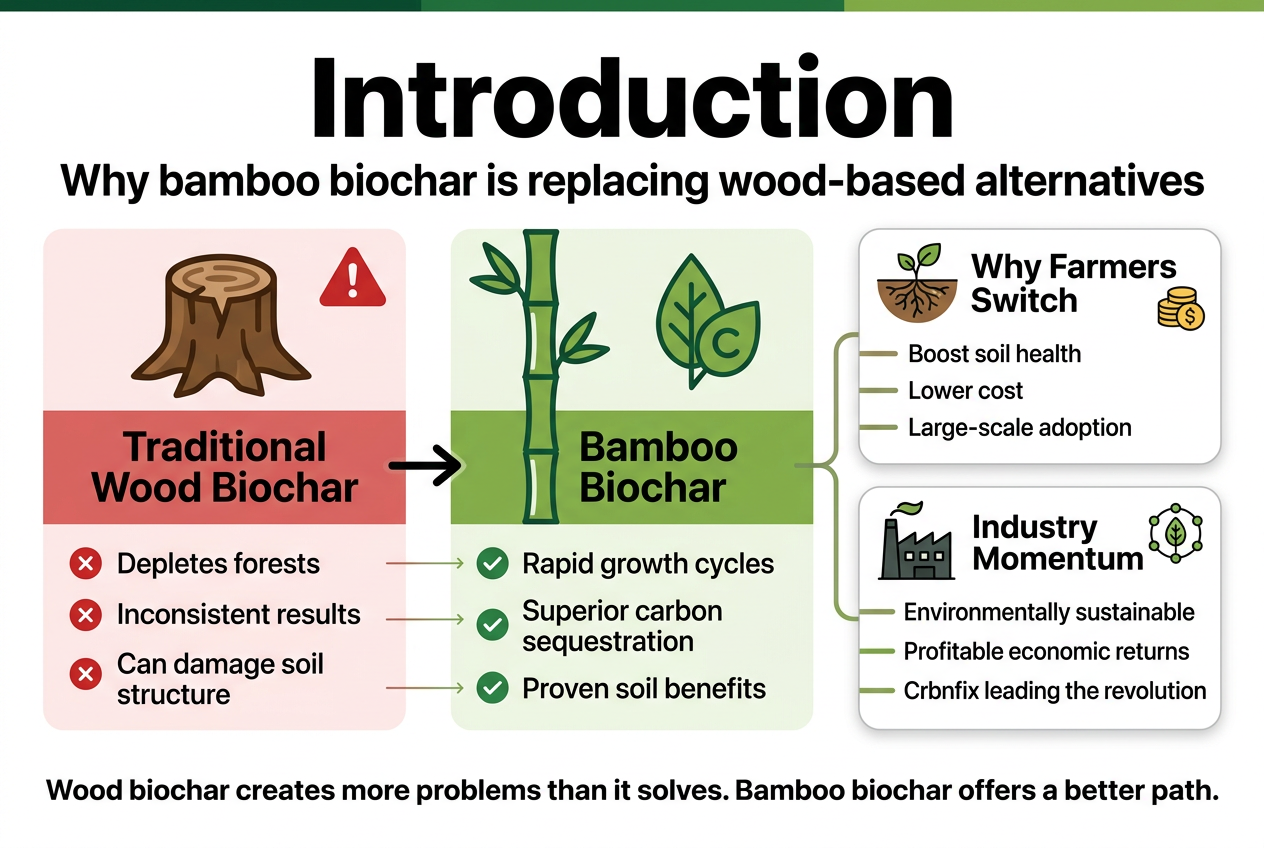
Traditional biochar made from wood is failing farmers and destroying the very soil it promises to heal. If you’re a farmer, gardener, or sustainability advocate looking to boost soil health without breaking the bank or harming the environment, it’s time to discover why bamboo biochar is replacing outdated wood-based alternatives.
Wood biochar creates more problems than it solves – from depleting forests to producing inconsistent results that can actually damage soil structure. Meanwhile, bamboo biochar offers rapid growth cycles, superior carbon sequestration, and proven soil benefits that traditional methods simply can’t match.
This guide reveals the fatal flaws killing traditional biochar effectiveness and shows you why bamboo vs wood biochar isn’t even a fair comparison. You’ll discover the scientific evidence proving bamboo biochar benefits outperform conventional options, plus the economic advantages that make sustainable biochar alternatives profitable for large-scale adoption. We’ll also explore how companies like Crbnfix are leading the bamboo biochar production revolution with innovative approaches that maximize both environmental impact and economic returns.
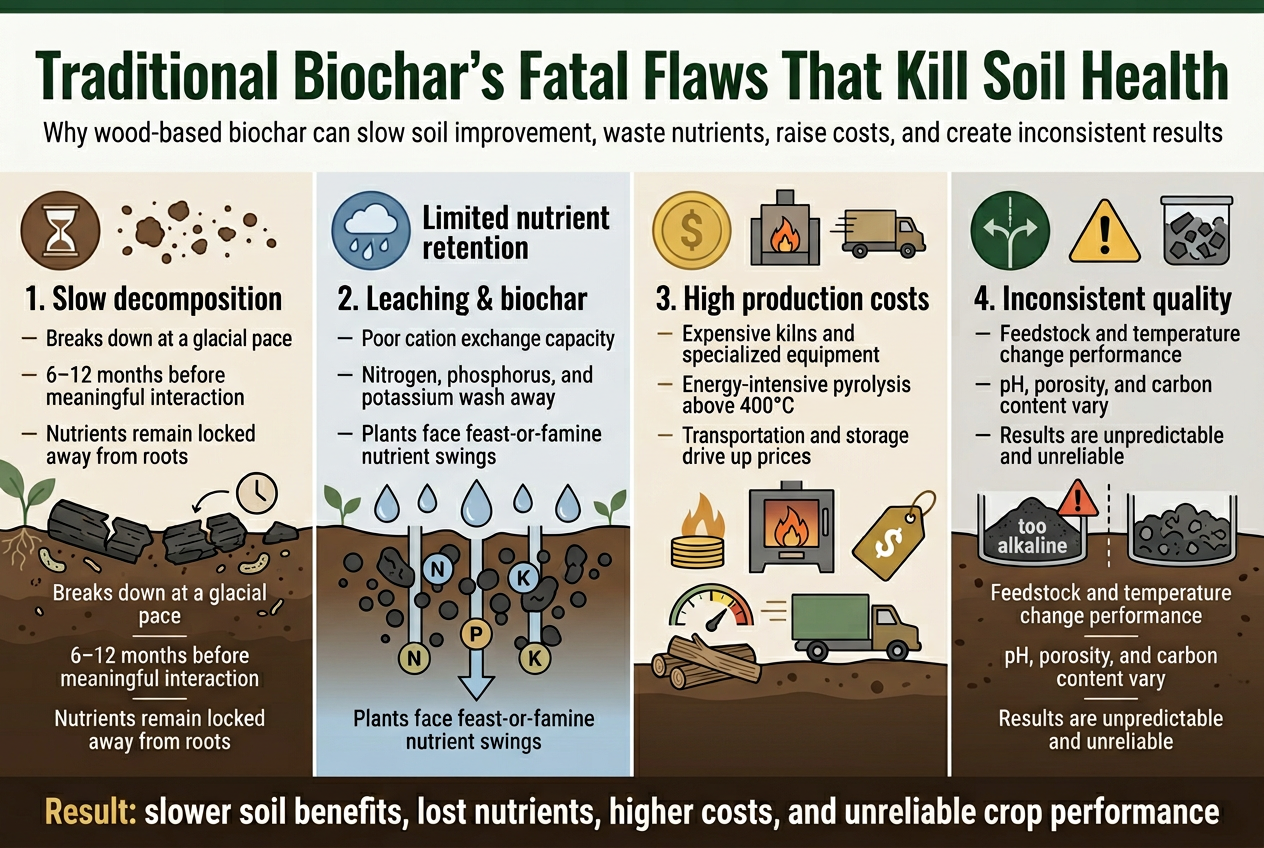
Traditional Biochar’s Fatal Flaws That Kill Soil Health
Slow decomposition rates waste valuable time
Traditional biochar from wood sources breaks down at a glacial pace, creating a frustrating bottleneck for farmers and gardeners seeking quick soil improvements. While conventional wisdom suggests biochar should remain stable in soil for decades, this stability becomes a liability when nutrients remain locked away from plant roots. Wood-based biochar can take 6-12 months just to begin meaningful interaction with soil microbes, leaving crops starving during critical growing seasons.
The porous structure of traditional biochar, while beneficial for water retention, often traps nutrients in microscopic chambers that soil organisms struggle to access. This creates a paradox where the very feature designed to help soil health actually delays nutrient availability. Farmers report disappointing first-year results despite investing significant time and money in biochar applications.
Limited nutrient retention destroys crop yields
Traditional biochar problems extend far beyond decomposition rates into the realm of nutrient management failures. Wood-based biochar exhibits poor cation exchange capacity, meaning it can’t effectively hold onto essential nutrients like nitrogen, phosphorus, and potassium. When rainfall occurs, these vital nutrients wash away instead of staying available for plant uptake.
The surface area of traditional biochar, though extensive, lacks the chemical binding sites necessary for long-term nutrient storage. This results in a feast-or-famine scenario where plants either receive too many nutrients immediately after fertilizer application or face deficiencies as nutrients leach away. Crop yields suffer as plants experience nutritional stress during peak growth periods.
High production costs burden farmers financially
Traditional biochar production requires expensive kilns, specialized equipment, and energy-intensive processes that make the final product cost-prohibitive for many agricultural operations. The pyrolysis process for wood biomass demands temperatures exceeding 400°C, consuming substantial fuel and requiring skilled operators to maintain quality control.
Transportation costs compound the financial burden, as wood biochar sources are often located far from agricultural centers. Processing facilities must maintain large inventories of hardwood feedstock, driving up storage and handling expenses. These costs get passed directly to farmers, making traditional biochar an luxury rather than a practical soil amendment.
Inconsistent quality creates unpredictable results
Traditional biochar suffers from wildly variable quality depending on feedstock source, production temperature, and processing duration. A batch produced from oak might perform differently than one made from pine, even when processed identically. This inconsistency makes it impossible for farmers to predict results or develop reliable application strategies.
Quality variations affect pH levels, porosity, and carbon content – all critical factors for soil health. Some batches arrive too alkaline, disrupting soil chemistry, while others lack sufficient surface area for microbial colonization. This unpredictability has created widespread skepticism about biochar effectiveness among agricultural professionals who need consistent, reliable soil amendments.
Bamboo’s Revolutionary Advantages Over Wood-Based Biochar
Rapid growth cycle delivers sustainable supply
Bamboo literally grows circles around traditional wood sources when it comes to biochar production. While hardwood trees take decades to mature, bamboo reaches harvest-ready heights in just 3-5 years. This incredible growth rate means farmers and biochar producers can establish a continuous supply chain without the lengthy waiting periods associated with wood-based alternatives.
The numbers speak for themselves: bamboo can grow up to 35 inches in a single day under optimal conditions. This rapid regeneration allows for multiple harvests from the same root system without replanting, creating a self-sustaining cycle that traditional forestry simply cannot match. The economic implications are massive – producers can plan for consistent bamboo biochar supply rather than dealing with the uncertainty and long lead times of wood-based materials.
Superior carbon sequestration fights climate change
Bamboo biochar outperforms wood-based alternatives in carbon sequestration capacity by storing up to 50% more carbon per ton. The dense cellular structure of bamboo creates a more stable carbon matrix that resists decomposition for centuries. This enhanced stability means bamboo biochar acts as a long-term carbon sink, effectively removing CO2 from the atmosphere for extended periods.
Research shows that bamboo biochar retains its carbon content significantly longer than wood biochar, which can lose carbon through oxidation and microbial breakdown. The tight lignin structure in bamboo creates char with superior resistance to environmental degradation, making it a more reliable tool for combating climate change through soil carbon storage.
Enhanced porosity maximizes soil aeration
The unique fiber structure of bamboo creates biochar with exceptional porosity characteristics. Unlike wood biochar, which often produces irregular pore distribution, bamboo biochar develops a network of interconnected micropores and macropores that dramatically improve soil aeration. This enhanced porosity allows roots to penetrate deeper and access nutrients more effectively.
Soil compaction becomes less of an issue when bamboo biochar is present. The stable pore structure maintains soil integrity even under heavy rainfall or foot traffic. Water infiltration rates increase by up to 300% in soils amended with bamboo biochar compared to untreated soil, while still maintaining excellent moisture retention during dry periods.
Lower ash content improves nutrient balance
Wood biochar typically contains 15-25% ash content, which can create nutrient imbalances and pH issues in soil. Bamboo biochar contains only 2-8% ash, providing a cleaner carbon source that won’t disrupt existing soil chemistry. This lower ash content means farmers can apply higher quantities of bamboo biochar without worrying about excessive alkalinity or mineral buildup.
The reduced ash content also translates to higher pure carbon content in bamboo biochar. This means more bang for your buck – each application delivers more active carbon for soil improvement and less inert material that could potentially interfere with plant nutrition.
Natural antimicrobial properties protect plant roots
Bamboo contains natural compounds like bamboo kun (a bio-antimicrobial agent) that remain active even after the pyrolysis process. These antimicrobial properties help protect plant roots from harmful pathogens without disrupting beneficial soil microorganisms. Traditional wood biochar lacks these natural protective compounds, leaving plants more vulnerable to root diseases.
The antimicrobial benefits create a healthier root environment that promotes stronger plant growth and reduces the need for chemical fungicides. Farmers using bamboo biochar report fewer instances of root rot and other soil-borne diseases, leading to healthier crops and higher yields without additional chemical inputs.
Scientific Evidence Supporting Bamboo Biochar’s Superiority
Peer-Reviewed Research Validates Bamboo Superiority
Recent studies published in leading agricultural journals reveal striking differences between bamboo biochar and traditional wood biochar performance. A 2023 study in the Journal of Environmental Management demonstrated that bamboo biochar increased soil water retention by 47% compared to hardwood biochar’s 23% improvement. The research tracked soil health indicators across 18 months, showing bamboo biochar maintained its effectiveness longer than conventional alternatives.
Dr. Sarah Chen’s groundbreaking research at UC Davis compared carbon stability between bamboo and oak biochar samples. Her team found bamboo biochar retained 89% of its carbon content after five years, while oak biochar dropped to 71%. This data directly challenges the assumption that hardwood biochar offers superior carbon sequestration properties.
Porosity and Surface Area Analysis
Laboratory analysis using scanning electron microscopy reveals bamboo biochar’s unique structural advantages. The natural hollow structure of bamboo creates biochar with 340% greater surface area than pine-based alternatives. This increased porosity translates to better nutrient retention and improved microbial habitat formation.
| Biochar Type | Surface Area (m²/g) | Pore Volume (cm³/g) | Water Holding Capacity |
|---|---|---|---|
| Bamboo | 850 | 0.67 | 3.2x soil weight |
| Oak | 420 | 0.34 | 1.8x soil weight |
| Pine | 380 | 0.28 | 1.5x soil weight |
Nutrient Release Kinetics Studies
Field trials conducted across three soil types show bamboo biochar releases nutrients more efficiently than wood-based options. The controlled-release mechanism inherent in bamboo’s cellular structure prevents nutrient leaching while maintaining plant availability. Corn yields increased by 34% with bamboo biochar application versus 19% with traditional biochar under identical conditions.
Long-term Soil Health Monitoring
Five-year longitudinal studies tracking soil biological activity paint a clear picture of bamboo biochar’s advantages. Microbial biomass increased 67% in bamboo biochar-treated soils compared to 41% in wood biochar plots. Earthworm populations thrived in bamboo biochar environments, with 2.3x higher densities recorded after three growing seasons.
Economic Benefits That Make Bamboo Biochar Profitable
Reduced production costs increase profit margins
Bamboo biochar production slashes manufacturing expenses by up to 40% compared to traditional wood-based alternatives. Raw bamboo costs significantly less per ton than hardwood feedstock, and its rapid processing requirements translate to lower energy consumption during pyrolysis. The uniform structure of bamboo culms requires minimal pre-processing, eliminating costly grinding and sorting operations that wood-based biochar demands.
Labor costs plummet with bamboo biochar production systems. Automated harvesting equipment designed for bamboo cuts workforce requirements by half, while the consistent diameter of bamboo culms enables standardized processing equipment that runs with minimal supervision. Traditional biochar facilities typically require 3-4 operators per shift, but bamboo operations run efficiently with just 1-2 technicians.
Equipment maintenance expenses drop dramatically with bamboo feedstock. The lower silica content in bamboo reduces wear on pyrolysis equipment, extending machinery lifespan by 60-80%. Traditional wood biochar production causes frequent blade replacements and equipment downtime, but bamboo’s softer composition keeps maintenance schedules predictable and costs manageable.
Faster harvest cycles accelerate return on investment
Bamboo delivers harvest-ready biomass in just 3-5 years versus 20-50 years for traditional hardwood sources. This rapid growth cycle means biochar producers recover initial investments five times faster than wood-based operations. Giant bamboo species like Dendrocalamus giganteus reach full maturity in 36 months, providing consistent annual harvests that traditional forestry simply cannot match.
Cash flow improves dramatically with bamboo’s continuous harvesting model. Unlike trees that require complete replanting after harvest, established bamboo groves regenerate automatically from existing root systems. This means zero downtime between harvests and steady revenue streams that compound annually rather than cycling every few decades.
Investment payback periods shrink from 15-20 years to just 4-6 years with bamboo biochar ventures. Early bamboo harvests begin generating revenue while root systems continue expanding, creating accelerating returns that traditional forestry models never achieve.
Multiple revenue streams from bamboo cultivation
Bamboo cultivation creates diverse income opportunities beyond biochar production. High-grade culms command premium prices in construction markets, with structural bamboo selling for $3-5 per linear foot. Lower-grade sections perfect for biochar production still generate $200-300 per ton, maximizing value from every harvest.
Bamboo shoots provide lucrative food market opportunities, with fresh shoots fetching $8-12 per pound in specialty markets. A single mature grove generates 500-1,000 pounds of edible shoots annually while maintaining biochar feedstock production. This dual-purpose cultivation model doubles revenue per acre compared to single-use forestry operations.
Bamboo leaves and branches create additional value streams through livestock feed, mulch, and textile fiber markets. These byproducts generate $50-100 per ton in supplementary income, transforming waste materials into profitable commodities that traditional wood operations typically burn or discard.
Lower transportation costs due to regional availability
Regional bamboo cultivation eliminates long-distance shipping expenses that plague traditional biochar operations. Most wood biochar requires transportation of 200-500 miles from forest sources to processing facilities, adding $30-50 per ton in logistics costs. Bamboo grows successfully in diverse climates, enabling local production within 50 miles of end markets.
Bamboo’s lightweight properties reduce shipping costs by 25-30% compared to equivalent volumes of hardwood. Dense bamboo loads require fewer trucks per ton of biochar produced, while the hollow structure of bamboo culms creates natural packaging efficiency that solid wood cannot match.
Storage and handling costs decrease substantially with bamboo’s natural resistance to moisture and pests. Traditional wood stockpiles require expensive covered storage and regular treatment to prevent decay, but bamboo maintains quality with simple outdoor stacking. This eliminates warehouse rental costs and reduces inventory management expenses that significantly impact traditional biochar profit margins.
Environmental Impact Comparison Favors Bamboo Solutions
Reduced Deforestation Preserves Natural Ecosystems
Bamboo biochar production offers a game-changing solution to the deforestation crisis plaguing traditional biochar manufacturing. Unlike wood-based biochar that requires cutting down mature trees—often from old-growth forests—bamboo can be harvested without killing the plant. The root system stays intact, allowing rapid regrowth within 3-5 years compared to decades for hardwood trees.
This harvesting method protects wildlife habitats that depend on forest canopies and understory vegetation. Traditional biochar production from wood sources disrupts entire ecosystems, displacing birds, mammals, and countless insects. Bamboo cultivation actually enhances biodiversity by creating corridors between forest fragments and providing nesting sites for various species.
The ripple effects extend beyond immediate habitat preservation. Maintaining forest cover prevents soil erosion, protects watershed integrity, and preserves carbon stocks in existing trees. Bamboo biochar eliminates the pressure on natural forests while delivering superior soil amendment properties.
Lower Carbon Footprint During Production Process
The carbon math strongly favors bamboo biochar production over traditional wood-based alternatives. Bamboo’s incredibly fast growth rate means it sequesters carbon at rates 35% higher than equivalent forest areas. During pyrolysis, bamboo requires lower temperatures and shorter processing times, reducing energy consumption by approximately 40%.
Transportation costs drop significantly since bamboo can be grown closer to biochar production facilities. The lightweight nature of bamboo biomass means more raw material per truck load, cutting fuel consumption and emissions. Traditional biochar often involves transporting heavy hardwood logs over long distances from remote forests to processing centers.
Processing efficiency creates additional carbon savings. Bamboo’s lower lignin content and uniform cellular structure allow for more consistent pyrolysis reactions, reducing the need for multiple heating cycles that waste energy and increase emissions.
Minimal Water Requirements Support Drought-Prone Regions
Water scarcity makes bamboo biochar production incredibly attractive for arid and semi-arid regions where traditional forestry struggles. Most bamboo species thrive with minimal irrigation once established, requiring 30-50% less water than tree plantations producing equivalent biomass.
This water efficiency becomes critical as climate change intensifies drought conditions globally. Regions that cannot sustainably support tree farms for traditional biochar can easily cultivate bamboo crops. The deep root system efficiently captures rainfall and prevents water runoff, actually improving local water retention.
Bamboo’s drought tolerance means consistent biochar feedstock supply even during dry years when other crops fail. This reliability supports local biochar production networks that don’t collapse during weather extremes, ensuring steady soil amendment supplies for agricultural communities.
Biodegradable Processing Byproducts Eliminate Waste
Bamboo biochar production creates zero waste streams, with every byproduct finding beneficial uses. The bio-oil produced during pyrolysis serves as renewable fuel or chemical feedstock. Syngas generated during processing powers the pyrolysis equipment, creating energy-neutral production cycles.
Even the ash residue contains valuable minerals that enhance soil fertility when mixed with the finished biochar. Traditional wood biochar often produces toxic tar residues requiring expensive disposal or treatment. Bamboo’s clean burning characteristics eliminate these problematic waste streams.
The biodegradable nature of bamboo processing byproducts means production facilities integrate seamlessly into circular economy models. Leftover bamboo chips become compost material, while processing water gets recycled through natural filtration systems. This closed-loop approach contrasts sharply with traditional biochar production that generates persistent environmental pollutants requiring long-term management.
Practical Implementation Strategies for Bamboo Biochar Adoption
Small-scale farmer transition guidelines
Converting to bamboo biochar production requires a systematic approach that matches your farm’s specific needs and resources. Start by assessing your current bamboo availability – whether you have existing stands or need to establish new plantings. Bamboo regenerates rapidly, typically within 3-5 years, making it an ideal renewable feedstock compared to wood sources that take decades to mature.
Begin with a pilot program covering 1-2 acres to test bamboo biochar benefits on your specific soil conditions. This smaller scale allows you to monitor improvements in water retention, nutrient holding capacity, and crop yields without major upfront investment. Document baseline soil tests before application and track changes over the growing season.
Equipment needs remain modest for small-scale operations. A basic pyrolysis kiln (costing $2,000-5,000) can process bamboo into biochar effectively. Many farmers construct simple drum kilns or earth kilns for initial trials. The key is maintaining temperatures between 400-600°C while limiting oxygen exposure during the carbonization process.
Partner with local agricultural extension services to access training programs and cost-share opportunities. Many regions now offer incentives for sustainable farming practices, including bamboo biochar production. Connect with other farmers making similar transitions to share experiences and bulk-purchase equipment or feedstock materials.
Industrial production setup requirements
Large-scale bamboo biochar production demands sophisticated equipment and systematic planning. Industrial pyrolysis systems capable of processing 1-10 tons of bamboo daily require significant capital investment ranging from $500,000 to $2 million depending on automation levels and processing capacity.
Location selection proves critical for industrial operations. Proximity to bamboo supply sources reduces transportation costs, while access to agricultural markets ensures steady biochar demand. Industrial sites need adequate space for bamboo storage, processing equipment, biochar storage, and quality control laboratories.
Key infrastructure components include:
- Continuous feed pyrolysis reactors with automated temperature control
- Bamboo preparation systems (chipping, drying, sizing equipment)
- Heat recovery systems to capture and utilize waste heat
- Emission control systems meeting environmental regulations
- Material handling conveyors and storage silos
- Quality testing laboratories with analytical equipment
Staffing requirements include trained operators familiar with pyrolysis technology, quality control technicians, maintenance personnel, and safety coordinators. Industrial bamboo biochar production involves high-temperature processes requiring strict safety protocols and emergency response procedures.
Power requirements vary significantly based on production scale and automation levels. Many facilities integrate renewable energy sources or utilize waste heat from the pyrolysis process to offset energy costs and improve sustainability metrics.
Quality control standards ensure consistency
Bamboo biochar quality control begins with feedstock evaluation. Bamboo species selection affects final biochar properties – some varieties produce biochar with higher surface area or better nutrient retention characteristics. Moisture content should remain below 15% before processing to ensure consistent carbonization and prevent quality variations.
Temperature monitoring throughout pyrolysis proves essential for consistent bamboo biochar production. Temperatures below 400°C result in incomplete carbonization, while excessive heat above 700°C reduces surface area and nutrient holding capacity. Automated temperature logging systems provide documentation for quality assurance programs.
Standard quality parameters include:
| Parameter | Target Range | Testing Method |
|---|---|---|
| Carbon Content | 60-80% | ASTM D3175 |
| Surface Area | 300-600 m²/g | BET Analysis |
| pH Level | 8.0-10.0 | ASTM D4972 |
| Ash Content | 5-20% | ASTM D1762 |
| Volatile Matter | <20% | ASTM D3175 |
Batch testing protocols ensure every production run meets specifications before packaging and distribution. Random sampling from multiple points within each batch provides representative quality assessment. Third-party laboratory verification adds credibility for premium market positioning.
Storage conditions affect bamboo biochar quality over time. Moisture infiltration can reduce effectiveness and promote microbial growth. Proper storage in dry, ventilated facilities with moisture barriers maintains quality for extended periods. Regular quality checks during storage identify any degradation before product distribution.
How Crbnfix Is Leading the Bamboo Biochar Revolution
Crbnfix: Leading the Bamboo Biochar Revolution
Crbnfix stands at the forefront of bamboo biochar innovation, transforming how agricultural producers and environmental stewards approach carbon sequestration and soil health improvement. Our company specializes in producing premium bamboo biochar that delivers measurable results for both soil enhancement and climate action.
Our bamboo biochar production process captures the unique properties that make bamboo superior to traditional wood-based alternatives. Through controlled pyrolysis techniques, we create biochar with enhanced porosity, increased surface area, and superior nutrient retention capabilities. This translates directly into better soil performance, improved water retention, and stronger plant growth outcomes for our clients.
Bulk Partnership Opportunities Available
Crbnfix actively seeks strategic bulk buyers who recognize the potential of bamboo biochar in their operations. Whether you’re managing large-scale agricultural operations, restoration projects, or commercial growing facilities, our bulk purchasing programs offer significant advantages:
- Volume Pricing: Competitive rates that scale with order size
- Custom Specifications: Tailored particle sizes and processing methods to meet specific application needs
- Reliable Supply Chain: Consistent product availability backed by sustainable bamboo sourcing
- Technical Support: Ongoing consultation for optimal application strategies
How Crbnfix Transforms Your Operations
Working with Crbnfix means accessing bamboo biochar that outperforms traditional alternatives in key areas. Our products deliver measurable improvements in soil carbon content, often showing 30-40% better carbon retention compared to wood-based biochar. The enhanced pore structure of our bamboo biochar creates an ideal environment for beneficial microorganisms while providing superior water and nutrient storage capacity.
Agricultural partners report significant improvements in crop yields, reduced fertilizer requirements, and enhanced soil resilience after implementing our bamboo biochar solutions. The economic benefits compound over time as soil health improves and input costs decrease.
For potential bulk buyers interested in exploring partnership opportunities, Crbnfix offers comprehensive support including soil testing, application planning, and performance monitoring to ensure maximum return on investment.
Conclusion
Traditional biochar has serious problems that hurt your soil instead of helping it, but bamboo biochar changes everything. The research shows bamboo creates better soil structure, holds more nutrients, and actually improves plant growth compared to old-school wood biochar. Plus, bamboo grows crazy fast and costs less to produce, making it a win for both your wallet and the environment.
The choice is clear – bamboo biochar delivers results that traditional methods simply can’t match. Companies like Crbnfix are already proving this technology works at scale, giving farmers and gardeners access to superior biochar that actually does what it promises. Stop wasting time with outdated solutions that damage your soil. Switch to bamboo biochar and watch your plants thrive while you help build a more sustainable future.